Ukraine's Path to the EU: The Role of the European Parliament Discussed at MSU
On 8 October 2026, the Ukrainian Association of Professors and Researchers of European Integration (APREI), together with the European Union Information Center at Mariupol State University and the State University of Trade and Economics, held an online round-table discussion entitled “Ukraine’s Road to EU Membership: What Happens Inside the European Parliament, and How Does the EP Influence Enlargement Policy?”
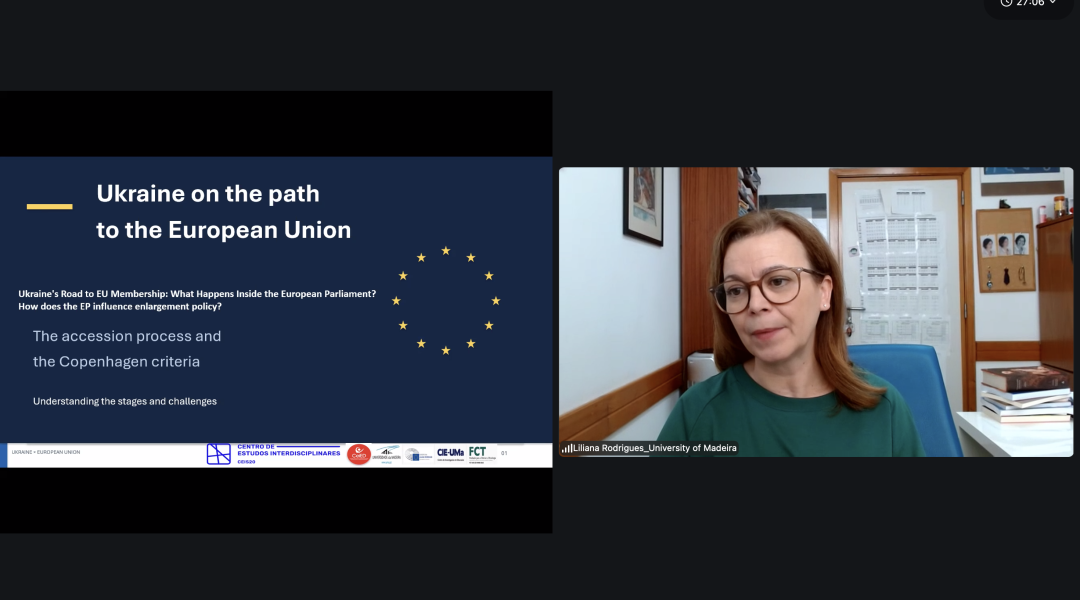
The keynote speaker was Prof. Liliana Rodrigues from the University of Madeira (Portugal), who served as a Member of the European Parliament representing Portugal for the Socialist Party within the Group of the Progressive Alliance of Socialists and Democrats (S&D) from 2014 to 2019. She was a member of the Committee on Regional Development and the Committee on Women’s Rights and Gender Equality, as well as a substitute member of the Committee on Culture and Education and the Subcommittee on Human Rights.
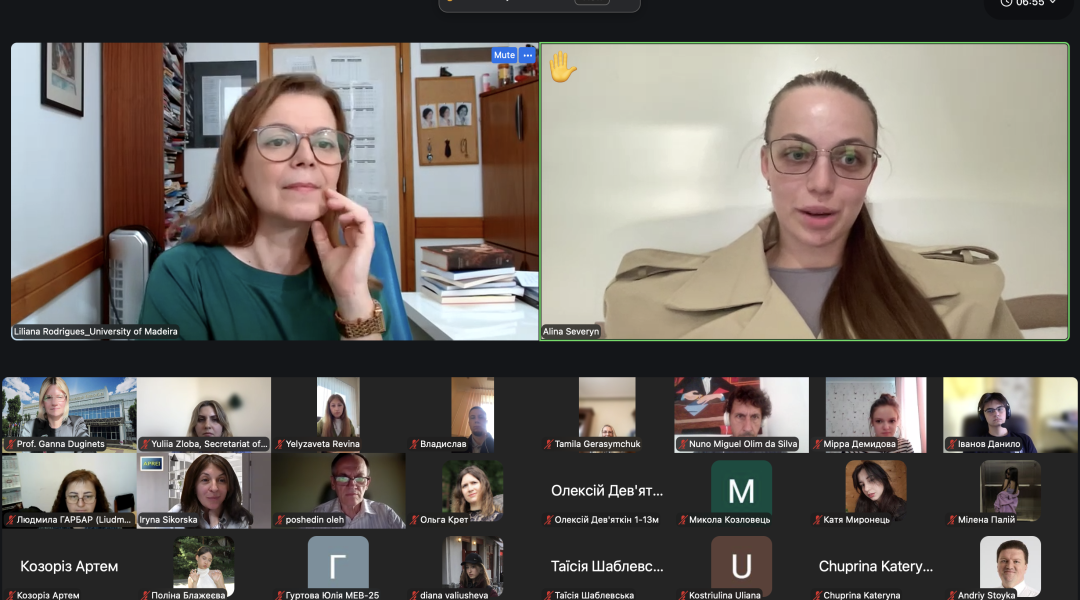
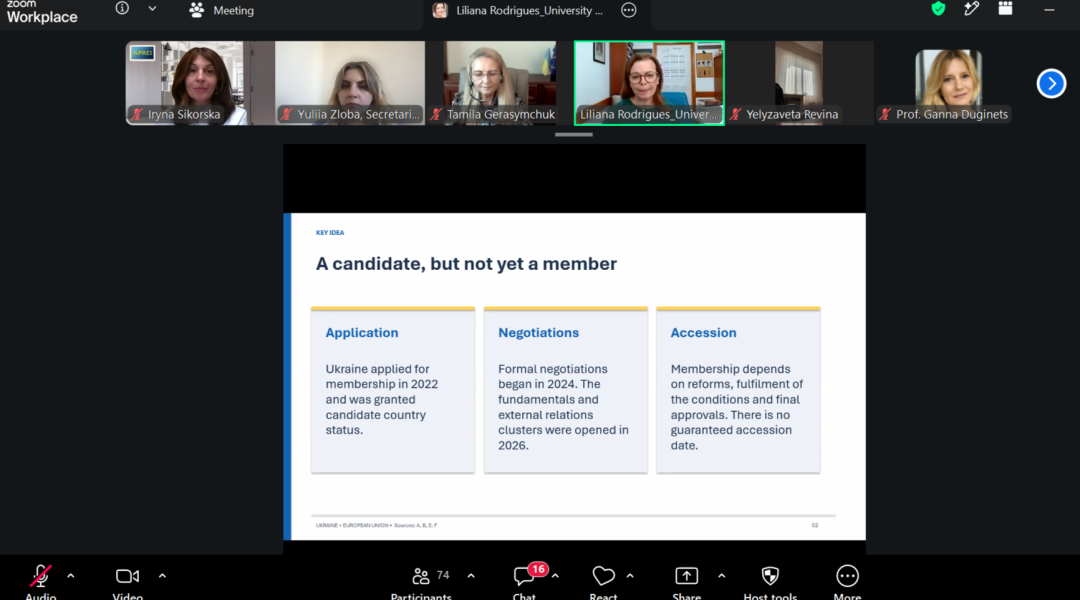
The event brought together students and faculty from Ukrainian universities and students from the University of Madeira. One hundred participants registered, representing almost all regions of Ukraine, with 74 participants joining the online meeting.
Opening the event, Dr. Iryna Sikorska, Chairperson of APREI and Director of the Center for International Education at Mariupol State University, highlighted the APREI’s contribution since 2015 to strengthening the European dimension of Ukrainian higher education, promoting teaching, research and outreach activities while contributing to the Ukraine’s European integration.
Dr. Sikorska expressed a big gratitude to the European Parliament Former Members Association for connecting universities across the world with the European policymakers. Through the “EP to Campus” Programme, former Members of the European Parliament share their expertise with academic communities, helping students and educators better understand how the European Union and its institutions work.
Prof. Liliana Rodrigues opened her address by emphasizing Portugal’s unwavering support for Ukraine. In her talk “Ukraine on the Path to the European Union”, Prof. Liliana Rodrigues analyzed the chronology of Ukraine's European integration trajectory and practical EU decision-making procedures. She focused on the importance of meeting the Copenhagen criteria and outlined the key stages of Ukraine's integration: the signing and entry into force of the Association Agreement (2014–2017), granting candidate status in 2022, and launching accession negotiations in 2024. In particular, she highlighted the milestones achieved in 2025 - 2026: the completion of the formal screening of Ukrainian legislation (September 2025), as well as the opening of negotiations on Cluster 1 “Fundamentals” (June 2026) and Cluster 6 “External Relations” (July 2026).
The speaker emphasized that while opening negotiating clusters represents a significant interim achievement, fully closing them requires the comprehensive fulfillment of established benchmarks. The EU enlargement process follows no predetermined schedules; it is strictly merit-based and hinges on ensuring the irreversibility of reforms.
In her address, Liliana Rodrigues highlighted the strategic priorities and key conclusions to sustain Ukraine's momentum toward the EU:
• Maintaining a rapid pace of judicial transformation, systematically combating corruption, upholding the rule of law, and building the institutional capacity of public administration;
• Adapting the economy and preparing national businesses, the public sector, and regulatory frameworks for full functioning within the EU Single Market;
• Consolidating international support and securing political consensus among all the EU Member States, while promoting the institutional readiness of the European Union itself to engage new members.
Analyzing the role of the European Parliament, Professor Rodrigues underlined its decisive consent power under Article 49 of the Treaty on European Union.
The speaker also highlighted the important role of the Erasmus+ programme and encouraged students to take advantage of opportunities to participate in Erasmus mobility. She invited Ukrainian universities to explore cooperation with the University of Madeira, where she currently works, opening possibilities for further academic exchange and institutional partnerships. Her address was followed by questions and short interventions from the participants.
Concluding her speech, Liliana Rodrigues affirmed that Ukraine’s European perspective is undeniable and real, however, the speed and success of its realization directly depend on the quality of reforms and meeting all established criteria.
Summarizing the event, the organizers and participants thanked Prof. Liliana Rodrigues for her contribution, and expressed their commitment to continuing academic dialogue on the Ukraine’s European future.

Останні новини: