Mariupol State University Marks 35 Years
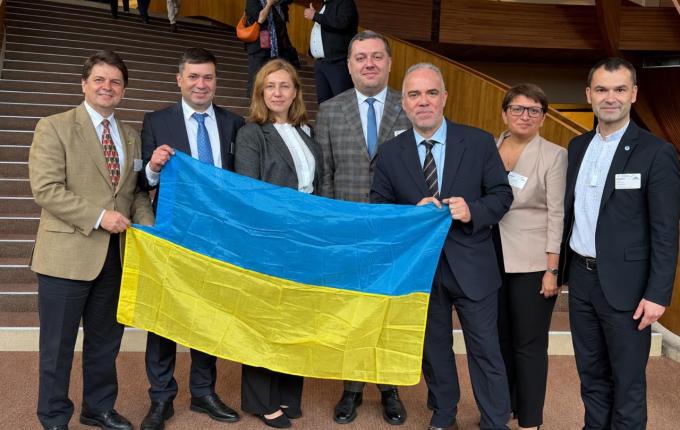
This year, Mariupol State University celebrates its 35th anniversary. Over those years, it has grown from a college with just a handful of classrooms into a university of European standing, endured the loss of its home in Mariupol and begun a new chapter in Kyiv. Yet through all this change, one thing has remained constant: MSU has preserved its identity, continued to grow and looks ahead with ambition and confidence.
Where the Story Began
The story of MSU began in 1991. That same year, as Ukraine restored its independence, a humanities college affiliated with Donetsk State University was established in Mariupol. The beginnings were modest: a few classrooms in the former Civic and Political Centre, 12 lecturers, 102 students and five academic programmes. Together, they laid the foundation for what was to come.
From the outset, MSU drew strength from its Greek roots. This distinctive connection became a thread running through all of the University’s activities, turning it into a centre for Modern Greek studies and the revival of the culture of the Greeks of the Azov region. It was only natural that Greece became its first international partner.
Step by step, the college grew into an institute and then a university. With its new status came a broader range and scope of academic programmes: alongside the humanities came the natural and technical sciences. By its 30th anniversary, MSU had become a leading comprehensive higher education institution in the Azov region, with an ambition to help transform Mariupol into a vibrant university city.
Mariupol at Heart
On 24 February 2022, the life of the University changed dramatically. The occupation of Mariupol forced MSU to leave its home and relocate to another city. Kyiv became the next chapter in its story. The University had to start again almost from scratch, initially with just a few classrooms provided by Kyiv National University of Construction and Architecture. Yet despite losing virtually everything material, MSU held on to what mattered most — its large and close-knit community of hundreds of academics, thousands of students and tens of thousands of alumni.
In its new home, MSU became a source of support for people from Mariupol. It provided humanitarian assistance and created an environment where everyone could once again feel at home. Over time, that role grew into a new mission: to preserve the identity of Mariupol and the Donetsk region, represent its home city in Ukraine and abroad, and support the development of communities wherever the University has a presence.
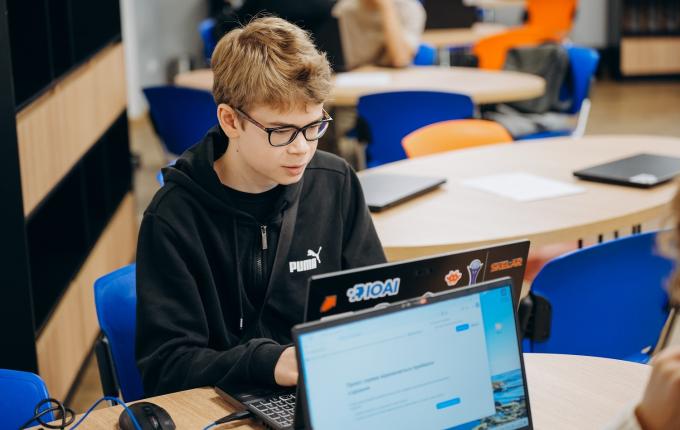
Today, MSU has much to be proud of. The challenges it faced did not break the University. They taught it to adapt and to believe that anything is possible — because what ultimately make a university are not its walls, but its people and their determination to act. MSU is now among Ukraine’s leading higher education institutions in digitalization. It has a modern learning environment with new equipment, is part of the Transform4Europe European University Alliance and continues to expand its international ties with universities around the world.
The Future Begins with a Dream
MSU cherishes a dream — to create a campus of its own in Kyiv. The Ministry of Education and Science of Ukraine placed its trust in the University and provided a large property complex with extensive grounds and four buildings. This is an opportunity not simply to expand the space available for learning, but to create a new environment for the development of the University community and communities from the Donetsk region.
The project has a name: “The Unbreakable Campus of the Unbreakable University.” The name was proposed by the President of Ukraine during his visit to MSU. Today, the academic community is raising funds and seeking partners to turn this vision into reality.
Thirty-five years ago, the University proved that great stories begin with a dream — and with people ready to make it happen. MSU must be strong and continue to grow today so that, with new ideas and new plans, it can return to a free Mariupol and become an educational flagship of the city’s recovery.
Останні новини: